Aquarium Water Quality Monitor with TDS Sensor & ESP32
493.Aquarium Water Quality Monitor with TDS Sensor & ESP32 In this project, we are going to discover how to monitor the water quality of an aquarium using a TDS sensor, a temperature sens…
Know the mission before touching a wire.
Understand what you are making, prepare the right tools, and make the workbench safe.
Project details
Aquarium Water Quality Monitor with TDS Sensor & ESP32 is a iot project. 493.Aquarium Water Quality Monitor with TDS Sensor & ESP32 In this project, we are going to discover how to monitor the water quality of an aquarium using a TDS sensor, a temperature sens…
- Source pages
- 1408-1415
- Named parts
- 17
- Build goal
- Working, tested prototype
Tools you need
- Digital multimeter
- Wire stripper and side cutters
- Soldering iron with a fine tip
- Current-limited bench supply
- Computer with a data-capable USB cable
Use eye protection, good lighting, and a clean insulated surface throughout the build.
Safety precautions
- Disconnect every power source before changing a connection.
- Check component polarity, pinout, and supply voltage twice.
- Use a current limit for the first power-up.
- Keep liquids, loose metal, and uninsulated wires away from the bench.
Gather, identify, and understand every part.
Use the standardized inventory, then open What's this? to learn each part's role, advantages, limitations, handling, and specifications.
What's this?Image, role, pros, cons, handling & specifications
ESP32 + LCD Display
A programmable controller that reads inputs, makes decisions, and drives the project's outputs.
What it does hereIt is the control centre and must use the documented board, pin map, supply, and logic level.
Buy / compare this part ↗Advantages
- Reprogrammable and reusable
- Large learning ecosystem
- Complex behaviour remains changeable
Limitations
- GPIO voltage and current are limited
- Some pins affect boot or communication
- Loads normally need a driver
Handling
- Disconnect power before rewiring
- Avoid static discharge
- Never power motors, relays, or pumps directly from GPIO
Specifications to verify
- Use the exact model, value, package, and rating listed for ESP32 + LCD Display; similar-looking parts are not always interchangeable.
- Confirm operating voltage, logic level, pinout, memory, USB interface, and maximum GPIO current.
What's this?Image, role, pros, cons, handling & specifications
TDS Sensor Gravity Analog TDS Sensor
A sensor converts a physical condition into an electrical signal the circuit can measure.
What it does hereIt provides project input as an analogue, digital, resistive, frequency, or calibrated signal.
Buy / compare this part ↗Advantages
- Adds real-world awareness
- Can usually be tested independently
- Often supports calibration
Limitations
- Readings can drift
- Placement affects results
- Some sensors need warm-up or calibration
Handling
- Protect the sensing surface
- Observe supply voltage and polarity
- Keep signal leads away from noisy power wiring
Specifications to verify
- Use the exact model, value, package, and rating listed for TDS Sensor Gravity Analog TDS Sensor; similar-looking parts are not always interchangeable.
- Confirm supply range, output type, measurement range, accuracy, response time, and pin order.
What's this?Image, role, pros, cons, handling & specifications
Temperature Sensor DS18B20 Waterproof Temperature Sensor
A sensor converts a physical condition into an electrical signal the circuit can measure.
What it does hereIt provides project input as an analogue, digital, resistive, frequency, or calibrated signal.
Buy / compare this part ↗Advantages
- Adds real-world awareness
- Can usually be tested independently
- Often supports calibration
Limitations
- Readings can drift
- Placement affects results
- Some sensors need warm-up or calibration
Handling
- Protect the sensing surface
- Observe supply voltage and polarity
- Keep signal leads away from noisy power wiring
Specifications to verify
- Use the exact model, value, package, and rating listed for Temperature Sensor DS18B20 Waterproof Temperature Sensor; similar-looking parts are not always interchangeable.
- Confirm supply range, output type, measurement range, accuracy, response time, and pin order.
What's this?Image, role, pros, cons, handling & specifications
 PASSIVE LEARNING VIEW
Resistor 4.7K
A passive component sets current, voltage, timing, filtering, or signal behaviour without adding gain.
What it does hereIts exact value and tolerance determine how the surrounding stage behaves.
Buy / compare this part ↗Advantages
- Simple and dependable
- Low cost
- Easy to measure before installation
Limitations
- A wrong value can stop or damage the circuit
- Ratings must not be exceeded
- Polarized parts require correct orientation
Handling
- Measure unclear values
- Observe capacitor polarity
- Avoid overheating leads while soldering
Specifications to verify
- Use the exact model, value, package, and rating listed for Resistor 4.7K; similar-looking parts are not always interchangeable.
- Confirm value, tolerance, power or voltage rating, polarity, and package size.
What's this?Image, role, pros, cons, handling & specifications
What is TDS & How it affects Fish Life?
A named project component whose exact role is defined by the source circuit and build guide.
What it does hereIt performs a documented electrical, control, interface, or construction function in this project.
Buy / compare this part ↗Advantages
- Selected for this project
- Can be checked independently
- Supports modular troubleshooting
Limitations
- Substitutes may differ
- Generic names can hide variants
- Pinouts and ratings vary
Handling
- Compare the received part with the source
- Keep it labelled
- Do not force connectors or adjusters
Specifications to verify
- Use the exact model, value, package, and rating listed for What is TDS & How it affects Fish Life?; similar-looking parts are not always interchangeable.
- Confirm dimensions, ratings, connection method, polarity, and environmental limits.
What's this?Image, role, pros, cons, handling & specifications
by the "Total Dissolved Solids" number. Salts, minerals, and conductive
A named project component whose exact role is defined by the source circuit and build guide.
What it does hereIt performs a documented electrical, control, interface, or construction function in this project.
Buy / compare this part ↗Advantages
- Selected for this project
- Can be checked independently
- Supports modular troubleshooting
Limitations
- Substitutes may differ
- Generic names can hide variants
- Pinouts and ratings vary
Handling
- Compare the received part with the source
- Keep it labelled
- Do not force connectors or adjusters
Specifications to verify
- Use the exact model, value, package, and rating listed for by the "Total Dissolved Solids" number. Salts, minerals, and conductive; similar-looking parts are not always interchangeable.
- Confirm dimensions, ratings, connection method, polarity, and environmental limits.
What's this?Image, role, pros, cons, handling & specifications
Gravity TDS Sensor
A sensor converts a physical condition into an electrical signal the circuit can measure.
What it does hereIt provides project input as an analogue, digital, resistive, frequency, or calibrated signal.
Buy / compare this part ↗Advantages
- Adds real-world awareness
- Can usually be tested independently
- Often supports calibration
Limitations
- Readings can drift
- Placement affects results
- Some sensors need warm-up or calibration
Handling
- Protect the sensing surface
- Observe supply voltage and polarity
- Keep signal leads away from noisy power wiring
Specifications to verify
- Use the exact model, value, package, and rating listed for Gravity TDS Sensor; similar-looking parts are not always interchangeable.
- Confirm supply range, output type, measurement range, accuracy, response time, and pin order.
What's this?Image, role, pros, cons, handling & specifications
including hydroponics and residential water. Because this product has a
A named project component whose exact role is defined by the source circuit and build guide.
What it does hereIt performs a documented electrical, control, interface, or construction function in this project.
Buy / compare this part ↗Advantages
- Selected for this project
- Can be checked independently
- Supports modular troubleshooting
Limitations
- Substitutes may differ
- Generic names can hide variants
- Pinouts and ratings vary
Handling
- Compare the received part with the source
- Keep it labelled
- Do not force connectors or adjusters
Specifications to verify
- Use the exact model, value, package, and rating listed for including hydroponics and residential water. Because this product has a; similar-looking parts are not always interchangeable.
- Confirm dimensions, ratings, connection method, polarity, and environmental limits.
What's this?Image, role, pros, cons, handling & specifications
DS18B20 Waterproof Temperature Sensor
A sensor converts a physical condition into an electrical signal the circuit can measure.
What it does hereIt provides project input as an analogue, digital, resistive, frequency, or calibrated signal.
Buy / compare this part ↗Advantages
- Adds real-world awareness
- Can usually be tested independently
- Often supports calibration
Limitations
- Readings can drift
- Placement affects results
- Some sensors need warm-up or calibration
Handling
- Protect the sensing surface
- Observe supply voltage and polarity
- Keep signal leads away from noisy power wiring
Specifications to verify
- Use the exact model, value, package, and rating listed for DS18B20 Waterproof Temperature Sensor; similar-looking parts are not always interchangeable.
- Confirm supply range, output type, measurement range, accuracy, response time, and pin order.
What's this?Image, role, pros, cons, handling & specifications
sheathing around it. These 1-wire digital temperature sensors have an
A named project component whose exact role is defined by the source circuit and build guide.
What it does hereIt performs a documented electrical, control, interface, or construction function in this project.
Buy / compare this part ↗Advantages
- Selected for this project
- Can be checked independently
- Supports modular troubleshooting
Limitations
- Substitutes may differ
- Generic names can hide variants
- Pinouts and ratings vary
Handling
- Compare the received part with the source
- Keep it labelled
- Do not force connectors or adjusters
Specifications to verify
- Use the exact model, value, package, and rating listed for sheathing around it. These 1-wire digital temperature sensors have an; similar-looking parts are not always interchangeable.
- Confirm dimensions, ratings, connection method, polarity, and environmental limits.
What's this?Image, role, pros, cons, handling & specifications
Interfacing TDS & Temperature Sensor with ESP32
A programmable controller that reads inputs, makes decisions, and drives the project's outputs.
What it does hereIt is the control centre and must use the documented board, pin map, supply, and logic level.
Buy / compare this part ↗Advantages
- Reprogrammable and reusable
- Large learning ecosystem
- Complex behaviour remains changeable
Limitations
- GPIO voltage and current are limited
- Some pins affect boot or communication
- Loads normally need a driver
Handling
- Disconnect power before rewiring
- Avoid static discharge
- Never power motors, relays, or pumps directly from GPIO
Specifications to verify
- Use the exact model, value, package, and rating listed for Interfacing TDS & Temperature Sensor with ESP32; similar-looking parts are not always interchangeable.
- Confirm operating voltage, logic level, pinout, memory, USB interface, and maximum GPIO current.
What's this?Image, role, pros, cons, handling & specifications
ESP32's 3.3V and GND pins, respectively. Establish a connection between
A programmable controller that reads inputs, makes decisions, and drives the project's outputs.
What it does hereIt is the control centre and must use the documented board, pin map, supply, and logic level.
Buy / compare this part ↗Advantages
- Reprogrammable and reusable
- Large learning ecosystem
- Complex behaviour remains changeable
Limitations
- GPIO voltage and current are limited
- Some pins affect boot or communication
- Loads normally need a driver
Handling
- Disconnect power before rewiring
- Avoid static discharge
- Never power motors, relays, or pumps directly from GPIO
Specifications to verify
- Use the exact model, value, package, and rating listed for ESP32's 3.3V and GND pins, respectively. Establish a connection between; similar-looking parts are not always interchangeable.
- Confirm operating voltage, logic level, pinout, memory, USB interface, and maximum GPIO current.
What's this?Image, role, pros, cons, handling & specifications
Aquarium Water Quality Monitor with TDS Sensor & ESP32
A programmable controller that reads inputs, makes decisions, and drives the project's outputs.
What it does hereIt is the control centre and must use the documented board, pin map, supply, and logic level.
Buy / compare this part ↗Advantages
- Reprogrammable and reusable
- Large learning ecosystem
- Complex behaviour remains changeable
Limitations
- GPIO voltage and current are limited
- Some pins affect boot or communication
- Loads normally need a driver
Handling
- Disconnect power before rewiring
- Avoid static discharge
- Never power motors, relays, or pumps directly from GPIO
Specifications to verify
- Use the exact model, value, package, and rating listed for Aquarium Water Quality Monitor with TDS Sensor & ESP32; similar-looking parts are not always interchangeable.
- Confirm operating voltage, logic level, pinout, memory, USB interface, and maximum GPIO current.
What's this?Image, role, pros, cons, handling & specifications
impressive displays available, the 3.5-inch TFT Touch Display is
An output component turns an electrical control signal into light, sound, motion, switching, or displayed information.
What it does hereIt presents the circuit result or acts on the physical world.
Buy / compare this part ↗Advantages
- Makes system state visible
- Can be tested separately
- Supports clear troubleshooting
Limitations
- Loads may exceed controller current
- Polarity or driver direction can matter
- Inductive loads create voltage spikes
Handling
- Use the documented driver stage
- Check polarity and load current
- Add flyback protection for inductive loads
Specifications to verify
- Use the exact model, value, package, and rating listed for impressive displays available, the 3.5-inch TFT Touch Display is; similar-looking parts are not always interchangeable.
- Confirm voltage, current, polarity, interface, driver requirements, and duty cycle.
What's this?Image, role, pros, cons, handling & specifications
Monitoring Aquarium TDS & Temperature
A named project component whose exact role is defined by the source circuit and build guide.
What it does hereIt performs a documented electrical, control, interface, or construction function in this project.
Buy / compare this part ↗Advantages
- Selected for this project
- Can be checked independently
- Supports modular troubleshooting
Limitations
- Substitutes may differ
- Generic names can hide variants
- Pinouts and ratings vary
Handling
- Compare the received part with the source
- Keep it labelled
- Do not force connectors or adjusters
Specifications to verify
- Use the exact model, value, package, and rating listed for Monitoring Aquarium TDS & Temperature; similar-looking parts are not always interchangeable.
- Confirm dimensions, ratings, connection method, polarity, and environmental limits.
What's this?Image, role, pros, cons, handling & specifications
increase in temperature. This is because an increase in electrical
A named project component whose exact role is defined by the source circuit and build guide.
What it does hereIt performs a documented electrical, control, interface, or construction function in this project.
Buy / compare this part ↗Advantages
- Selected for this project
- Can be checked independently
- Supports modular troubleshooting
Limitations
- Substitutes may differ
- Generic names can hide variants
- Pinouts and ratings vary
Handling
- Compare the received part with the source
- Keep it labelled
- Do not force connectors or adjusters
Specifications to verify
- Use the exact model, value, package, and rating listed for increase in temperature. This is because an increase in electrical; similar-looking parts are not always interchangeable.
- Confirm dimensions, ratings, connection method, polarity, and environmental limits.
What's this?Image, role, pros, cons, handling & specifications
reached 404ppm when the temperature was 49°C. The ideal temperature
A named project component whose exact role is defined by the source circuit and build guide.
What it does hereIt performs a documented electrical, control, interface, or construction function in this project.
Buy / compare this part ↗Advantages
- Selected for this project
- Can be checked independently
- Supports modular troubleshooting
Limitations
- Substitutes may differ
- Generic names can hide variants
- Pinouts and ratings vary
Handling
- Compare the received part with the source
- Keep it labelled
- Do not force connectors or adjusters
Specifications to verify
- Use the exact model, value, package, and rating listed for reached 404ppm when the temperature was 49°C. The ideal temperature; similar-looking parts are not always interchangeable.
- Confirm dimensions, ratings, connection method, polarity, and environmental limits.
Connect one verified path at a time.
Explore the named components and standardized signal flow, then use Source Check to verify exact physical pins, values, and topology before applying power.
Trace this circuit.
Aquarium Water Quality Monitor with TDS Sensor & ESP32: interactive parts, standardized terminals, responsive anchored wires, student explanations, and the original circuit reference in one shared system.
Trace before wiring
Follow power, ground, inputs, processing, and outputs in that order. Never guess a pin from package shape alone.
Connect with power off
Make short, labelled connections and share a common ground only where the schematic requires it.
Inspect every joint
Check continuity, polarity, adjacent shorts, and loose connections before the first power-up.
Open all source diagrams and build views 5 visuals
Confirm the hardware-only control path.
This project does not include firmware in the source. The circuit itself provides the required behaviour.
How to connect
- Match every controller label to the circuit view and source pin map.
- Join grounds before signal wires when separate low-voltage supplies are used.
- Keep motors, relays, pumps, and other loads on a suitable driver and external supply.
Common mistakes
Reversed VCC/GND, board-label versus GPIO-number confusion, missing common ground, and charge-only USB cables.
Troubleshoot
Disconnect loads, continuity-test one path at a time, then test with a current limit.
Software preparation
No IDE, board package, library, or firmware upload is required for this project.
If you add a programmable controller as an extension, document its pin map separately.
How to upload code
The original design is implemented entirely in hardware, so proceed after verifying the circuit and supply.
Assemble, deploy, test, and troubleshoot.
Use the complete source notes in build order, then pass the final checks before calling the project finished.
Build in functional stages
- Power and regulation
- Controller or processing stage
- Inputs and sensors
- Outputs and loads
- Enclosure and strain relief
Power up safely
- Inspect unpowered continuity first
- Apply the lowest safe current limit
- Measure supply rails before signals
- Add one load at a time
- Record expected and actual results
Work from simple to complex
- Confirm power, ground, polarity, and orientation
- Compare each pin with the source
- Test inputs separately from outputs
- Replace only one variable at a time
- Power off before every correction
Follow the documented instructions.
These notes come from this project's source and remain in their original order.
Project overview
Project build note493.Aquarium Water Quality Monitor with TDS Sensor & ESP32 In this project, we are going to discover how to monitor the water quality of an aquarium using a TDS sensor, a temperature sensor, an ESP32 WIFI module, and a TFT LCD display. A facility in which a collection of aquatic species is displayed or studied is referred to as an aquarium. An aquarium can be a receptacle for preserving aquatic organisms in either freshwater or marine environments. In a Smart Aquarium, you need to keep an eye on the water quality and have it automatically changed and feed the fish. Monitoring the water's quality is the most difficult task because it needs the use of a variety of sensors and electrical instruments. The characteristics that make up the
water quality are as follows
Project build notepH of the water, total dissolved solids, turbidity, dissolved oxygen, temperature, and electrical conductivity, etc. But the water temperature and total dissolved solids (TDS) are the most crucial parameters to consider for aquariums and aquatic life in general, including fish. The ideal temperature range for an aquarium is between 25 and 27 degrees Celsius (76- and 80- degrees Fahrenheit). TDS levels in the water between 400 PPM and 450 PPM are recommended for the majority of freshwater fish. With the help of an ESP32 and a TDS sensor, we will create our own aquarium water quality monitoring system in this project. On the TFT Color LCD Display, we are going to display the current value of the TDS in the water as well as the temperature. You may find the information you need about the TDS Sensor and the DS18B20 Waterproof Temperature Sensor on the posts that came before this one. The utilization of a TFT LCD Display that is embedded with ESP32 is the most impressive aspect of the project. Makerfabs is responsible for the design of the individualized Display.
Part Required
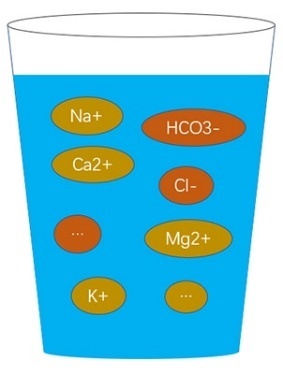
Project build noteESP32 + LCD Display TDS Sensor Gravity Analog TDS Sensor Temperature Sensor DS18B20 Waterproof Temperature Sensor Resistor 4.7K Connecting Wires Breadboard What is TDS & How it affects Fish Life? The total amount of solids that have been dissolved in water is represented by the "Total Dissolved Solids" number. Salts, minerals, and conductive metal ions are all examples of solids that fall under this category. In addition to that, the value is referred to as the conductivity of the water. Because the water's ability to conduct electricity is directly proportional to the amount of such minerals and ions that are present in it. TDS meters commonly use micro siemens or parts per million (ppm) as the unit of measurement for this conductivity. The latter term refers to the number of solid particles that can be found in one million water mixture particles and stands for parts per million. The result of 40 ppm indicates that out of a million particles, there are only 40 ions that have dissolved, and that the remaining particles are consequently water molecules.
What kind of effects does TDS have on fish and other aquatic life? The fishes require a consistent environment that maintains the same TDS and PH levels as their natural habitat, which is either an aquarium or a tank. The total dissolved solids (TDS) requirements of various fishes vary. TDS levels in the water between 400 PPM and 450 PPM are recommended for the majority of freshwater fish. In the event that the concentrations are too high, it will result in the death of fish and will make it possible for a large amount of algae to bloom. The low TDS concentration in the water will have a negative impact on the growth of the fish. To put it another way, if the TDS rises to levels that are abnormally high, you might have to assist the smaller fish. Gravity TDS Sensor The Gravity Analog TDS Sensor is a TDS sensor/Meter Kit that is compatible with Arduino and is used to determine the TDS value of the water. It is applicable to the testing of water quality in a variety of settings, including hydroponics and residential water. Because this product has a wide voltage input range of 3.3 to 5.5V and an analog voltage output range of 0 to 2.3V, it is suitable with control systems or boards that operate on either 5V or 3.3V. An alternating current (AC) signal serves as the source of the excitation, and this not only helps to ensure that the probe will not get polarized and that it will have a longer lifespan, but it also contributes to the increased signal stability. Because the TDS probe is watertight, it can remain submerged in liquid for extended periods of measurement. The TDS measurement range of the sensor is from 0 to 1000 ppm, and it has an accuracy of 10% FS at 25 degrees Celsius. The probe cannot be
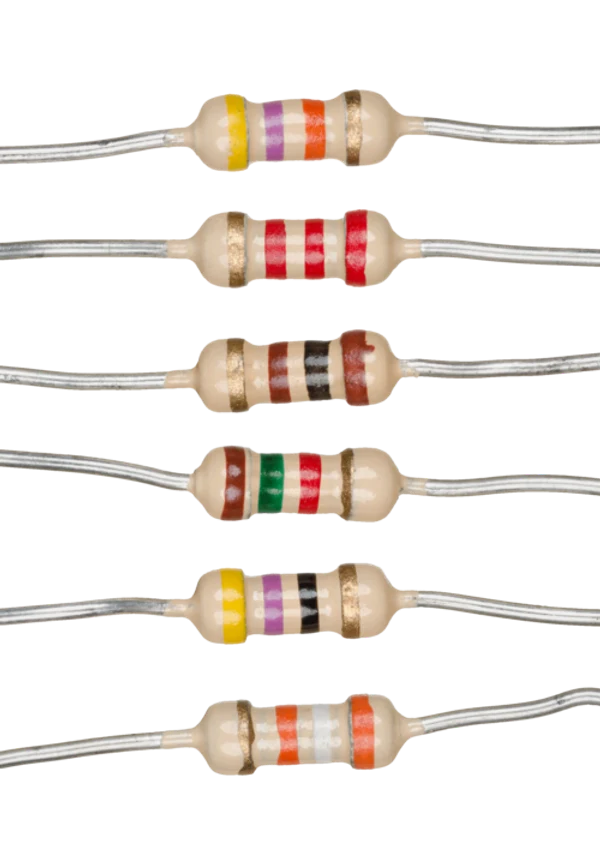
utilized in water with a temperature that is higher than 55 degrees Celsius. DS18B20 Waterproof Temperature Sensor This version of the DS18B20 Sensor is pre-wired and waterproofed, making it suitable for use when measuring anything at a great distance or in damp environments. The Temperature Sensor has a measuring range of -55 to 125 degrees Celsius (-267 to +257 degrees Fahrenheit). The cable has a PVC sheathing around it. These 1-wire digital temperature sensors have an accuracy of 0.5 degrees Celsius over most of their measuring range. They work wonderfully with any microcontroller that just has one digital pin available. The sensor calls for two different libraries, namely the One-Wire Library and the Dallas Temperature Sensor Library. When utilizing the sensor, it is necessary to have a pullup resistor of 4.7k, which is required to be connected from the DATA line to the VCC line. Interfacing TDS & Temperature Sensor with ESP32 Let's go on to the next step, which is to connect the Gravity TDS Sensor and the DS18B20 Temperature Sensor to the ESP32 Board. During the TDS
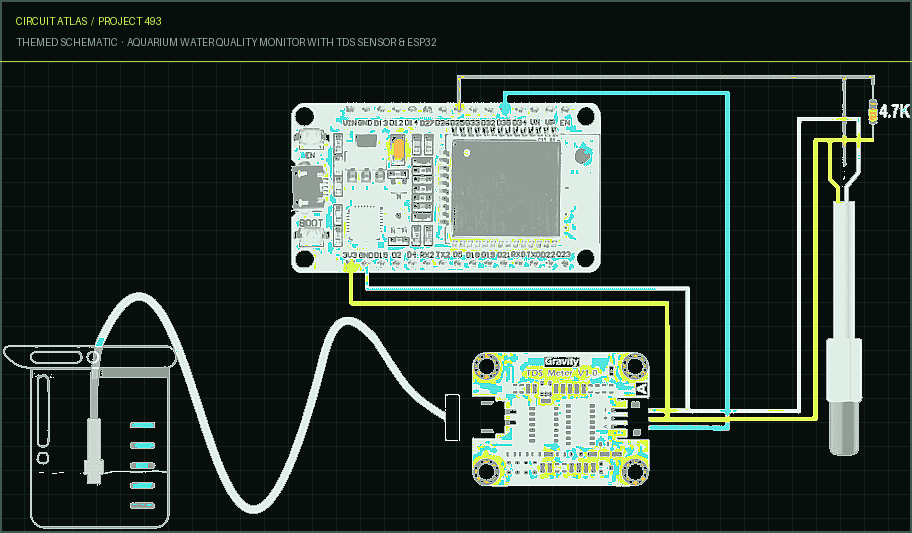
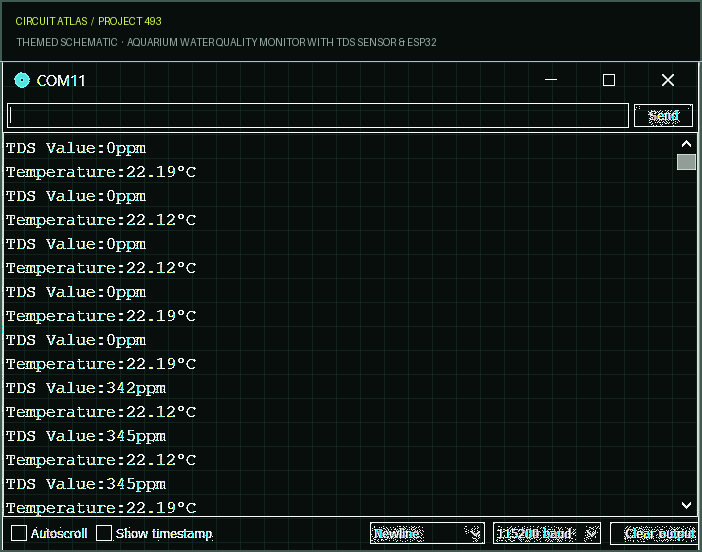
correction process, having access to the temperature parameter is essential, which is why we have opted to make use of a temperature sensor. When the temperature rises and falls, there is a significant shift in the TDS levels. Connect the VCC and GND pins of the temperature and time sensor to the ESP32's 3.3V and GND pins, respectively. Establish a connection between the output analog pin of the TDS Sensor and the IO35 Pin of the ESP32. In a similar manner, connect the output of the DS18B20 to the IO25 Pin on the ESP32. A pull-of resistor with a value of 4.7K is required, and there must be a connection made between the DS18B20 output pin and 3.3V VCC so that the parasitic power may be supplied. You can test the system by putting the individual components together on a breadboard. Launch the Serial Monitor once the code has been successfully uploaded. Additionally, a sample of water should be dipped using the TDS and Temperature Sensor probe. Keeping an eye on the Serial Monitor, you will notice that it will start displaying the readings of both the temperature and the TDS value.
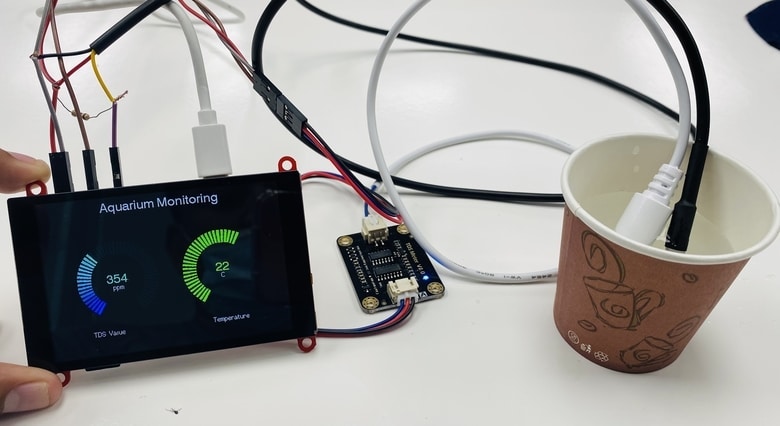
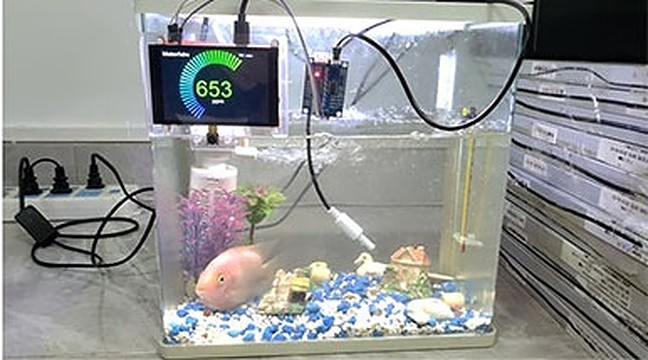
Aquarium Water Quality Monitor with TDS Sensor & ESP32 Now let's modify the previous project by adding a display to it, and we'll construct a portable Water TDS Meter that uses the display. One of the most impressive displays available, the 3.5-inch TFT Touch Display is incorporated with the ESP32. The display can be of great use in monitoring the aquarium's water quality for fish and other forms of aquatic life. Monitoring Aquarium TDS & Temperature After the code has been successfully uploaded, you should push the rest button located on the ESP32 Board. You can now monitor the temperature and total dissolved solids in your aquarium using a lovely widget.
A little bit of salt poured into the liquid might serve as a test for the sensor. The TDS level will quickly rise as a result of the addition of the salt. This is because salt is a substance that contains ions. As a result, the salt solution has the ability to significantly boost the conductivity of any given solution. In order to determine the value of TDS in relation to temperature, you can use hot water. The concentration of TDS will increase in response to an increase in temperature. This is because an increase in electrical conductivity occurs whenever there is a concurrent increase in temperature. The value of the TDS was 344ppm when the temperature was 21°C, but it reached 404ppm when the temperature was 49°C. The ideal temperature range for an aquarium is between 25 and 27 degrees Celsius (76- and 80- degrees Fahrenheit). TDS levels in the water between 400 and 450 PPM are optimal for the survival of the vast majority of freshwater fish.
You built Aquarium Water Quality Monitor with TDS Sensor & ESP32.
You followed the full workflow from understanding the mission to testing the finished project. That is a real engineering achievement - well done.
Monitoring the Indoor Environment Using an ESP32 and an LCD Display
Ready to reuse what you learned in another project from the same track?
Start this project →